
- Каталог оборудования Siemens
- Каталог продуктов Siemens Industry
- Приводная техника
- Техника автоматизации
- Системы автоматизации
- Промышленные системы автоматизации SIMATIC
- Программируемые контроллеры
- Логические модули LOGO!
- Базовый контроллер
- SIMATIC S7
- Контроллеры для распределенных систем
- Программный контроллер
- Дополнительные компоненты
- Распределенный ввод/вывод
- Система автоматизации SIMATIC TDC
- Программное обеспечение для SIMATIC S7/WinAC
- Программаторы
- SIEMENS Solution Partner
- Test
- Программируемые контроллеры
- Motion Control - система SIMOTION
- Системы автоматизации на базе СЧПУ SINUMERIK
- Система соединителей/ шкафы управления
- Программное обеспечение для систем автоматизации
- Промышленные системы автоматизации SIMATIC
- Системы визуализации SIMATIC HMI
- Системы идентификации
- Промышленные коммуникации SIMATIC NET
- Промышленные аппараты управления SIRIUS
- Промышленные информационные технологии
- Управление на базе РС
- Системы управления процессом
- Контрольно-измерительные приборы
- Анализаторы процесса
- Блоки питания SITOP
- Продукты для специальных требований
- Системы автоматизации
- Energy
- Автоматизация и безопасность зданий
- Низковольтная коммутационная техника
- Технология безопасности
- Системные решения и продукты для отраслей
- Сервис
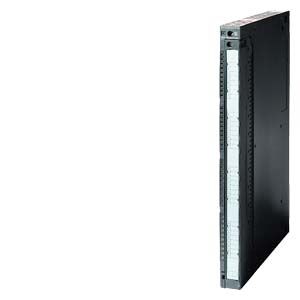
SIPLUS S7-400 digital modules
- Информационные материалы
Информационные материалы
The following SIPLUS S7-400 F digital modules are available for use in extreme environmental conditions:
- SIPLUS S7-400 SM 421;
digital inputs - SIPLUS S7-400 SM 422;
digital outputs
SIPLUS S7-400 digital modules are designed for use in the following environmental conditions:
- Extended ambient temperature range from -25 °C to +60 °C
- Where increased resistance to chemical, mechanical and biological loading as well as salt spray is required
- Higher installation altitudes
- In relative humidity up to 100%
Область применения
Digital input/output modules are used to interface binary process signals to the S7-400. Digital sensors and actuators can be connected to the SIMATIC S7-400 via these modules.
Use of the digital input/output modules offers users the following advantages:
- Optimal adaptation:
The number of inputs/outputs can be adapted to the corresponding task with the help of modules which can be combined as required. Superfluous investments are avoided. - Flexible process connection:
The S7-400 can be connected to the process via many different digital actuators and sensors.
Дизайн
Digital output modules feature the following mechanical characteristics:
Compact design
The rugged plastic housing contains:
- Green LEDs for indicating the signal status at the outputs.
- Two red LEDs for displaying internal/external errors, with modules with diagnostics capability, and for display of faults (e.g. blown fuses and absence of load voltage).
- Labeling strips for sliding into the front connector (included in scope of delivery; also as copy template in manual); cover foils can be obtained as option.
Easy installation
The modules are hung into the subrack and screwed in place.
User-friendly wiring
The modules are wired via a plug-in front connector. When the module is connected for the first time, a coding latches in the front connector so that this now only fits onto modules with the same voltage range.
When a module is replaced, the front connector can be used for the new module of the same type with the complete wiring.
- SIPLUS S7-400 SM 421;