
- Каталог оборудования Siemens
- Каталог продуктов Siemens Industry
- Приводная техника
- Техника автоматизации
- Системы автоматизации
- Системы визуализации SIMATIC HMI
- Системы идентификации
- Промышленные коммуникации SIMATIC NET
- Промышленные аппараты управления SIRIUS
- Промышленные информационные технологии
- Управление на базе РС
- Системы управления процессом
- Контрольно-измерительные приборы
- Анализаторы процесса
- Непрерывные анализаторы газов
- Непрерывные анализаторы газов, эктрактивные
- Непрерывный газовый анализ, in-situ
- Промышленные газовые хроматографы
- Analytical Application Sets
- Communication and software
- General information
- Communication
- Operator functions of Series 6
- FAT & factory certificates
- Ex versions
- Extractive continuous process gas analyticsATEX II 2G control unitATEX II 2G control unit, leakage compensationATEX II 2G/3G control unit, continuous PurgingPurging unit FM (Class I Div 2)Additional units
- Extractive continuous process gas analytics
- In situ continuous process gas analytics, LDS 6
- In situ continuous process gas analytics, SITRANS SL
- Process gas chromatography
- Tables
- Definitions
- Блоки питания SITOP
- Продукты для специальных требований
- Energy
- Автоматизация и безопасность зданий
- Низковольтная коммутационная техника
- Технология безопасности
- Системные решения и продукты для отраслей
- Сервис
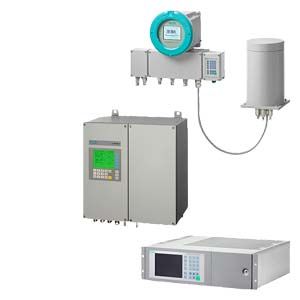
Extractive continuous process gas analytics
- Информационные материалы
Информационные материалы
Use of Series 6 in hazardous areas
Dependent on the application, the measuring equipment can include the following parts:
- Analyzer with Ex approval
- Ex p safety equipment (purging unit)
- Flame arrestors with Ex approval
- Ex i isolating transformer
- Isolating relay with Ex approval
Gas analyzers
Suitability-tested field analyzers of Series 6 must be used to measure gases in hazardous areas.
The Series 6 analyzers are approved in accordance with Ex type of protection "Flameproof enclosure Ex p" for Zone 1 and Zone 2. In addition, these analyzers must be connected to monitoring equipment which must also be suitability-tested.
Following pre-purging of 5 minutes, the monitoring equipment ensures that no gas fumes can enter the enclosure, and accumulation of the sample gas in the enclosure is prevented. The volume flow during the pre-purging phase is > 50 l/min. The protective gas is usually fed into the analyzer enclosure from a supply network via the monitoring equipment.
Exception: A flameproof enclosure is not required in zone 2 for the measurement of gases whose composition always remains below the lower explosive limit (25% of LEL); in this case, it is sufficient for the field housing to have the gas-fume-proof type of protection (type of protection Ex n R).
Category ATEX II 2G (Ex zone 1)
Two versions of flameproof enclosure Ex p complying with the directive 2014/34//EU (94/9/EC) are available for use in zone 1:
- Flameproof enclosure with compensation of losses resulting from leaks
The principle of this type of protection is based on prevention of ingress of the surrounding atmosphere or of the sample gas into the enclosure of the electrical equipment through overpressure in the device.
Only the volume of protective gas that is required to maintain an overpressure of at least 50 Pa (recommended 5 hPa) above the sample gas pressure and at least 50 Pa (recommended 5 hPa) above the atmospheric pressure is fed into the enclosure. The maximum purging gas pressure is 165 hPa; this results in a maximum permissible sample gas pressure of 164 hPa or 160 hPa.
If the sample gas is combustible or occasionally flammable, the analyzer enclosure must be additionally purged with inert gas (e.g. nitrogen). In these cases, you must additionally ensure that the internal enclosure pressure is at least 50 Pa (recommended 5 hPa) higher than the fail-safe-regulated sample gas pressure.
If the pressure control of the sample gas is not fail-safe (= "double fault safety"), but only operationally safe (="single fault safety"), a differential pressure switch of the Ex p safety equipment must be used to signal if the sample gas pressure exceeds the purging gas pressure. This measure initiates a safety shutdown.
With occasionally flammable sample gas mixtures, flame arrestors must be additionally mounted externally at the sample gas inlet and outlet of the analyzer (for OXYMAT and CALOMAT).
Both the differential pressure switch and the flame arrestors come into contact with the sample gas and must therefore be made of corrosion-proof material, if applicable.
Design examination certificate: PTB 00 ATEX 2022 X
Device identification: II 2 G Ex px [ia] IIC T4 - Flameproof enclosure with continuous purging
The principle of this type of protection is based on having continuous purging of the Ex p enclosure after the pre-purge. It prevents ingress of the surrounding atmosphere and ensures that, for example, sample gas released through leaks is thinned to the extent that a combustible mixture cannot be created. The volume flow of the protective gas is fixed at 1 l/min and exceeds the maximum release volume by a factor of more than 100.
Protective gas flows continuously through the enclosure with a volume flow of at least 1 l/min; in addition, the flow ensures that the enclosure pressure is increased to at least 50 Pa (recommended 5 hPa) higher than the surrounding pressure.
The max. permissible purging gas pressure is 165 hPa. The max. permissible sample gas pressure is equivalent to the permissible analyzer sample gas pressure.
Type examination certificate: TÜV 01 ATEX 1708 X
Device identification: II 2 G Ex px ia [ia] IIC T6 or T4 or T3 Gb.
The purging gas is monitored using Ex p monitoring equipment: This is a stand-alone unit which is connected electrically and pneumatically to the analyzer. Explosion protection is only provided when both devices are combined (analyzer and purging unit, and possibly further measures) (see below).
Category ATEX II 3G (Ex zone 2)
The principle of the type of protection "Flameproof enclosure for devices of Category 3" is based on preventing the ingress of any hazardous atmosphere into the gas analyzer.
Two versions complying with Directive 2014/34/EU (94/9/EC) are available for use in Zone 2.
- Explosion protection due to gas-fume-proof enclosure
The enclosure is sealed sufficiently to prevent the ingress of gas fumes. With this type of protection, only sample gases may be fed in which are below the LEL (25% of the LEL).
Design examination certificate: TÜV 01 ATEX 1686 X
Device identification: II 3 G Ex nR IIC T6 or T4 Gc
It is not necessary to install a purging unit here. - Flameproof enclosure with continuous purging
Protective gas continuously flows through the enclosure with a volume flow of at least 1 l/min; furthermore, the flow results in an overpressure in the enclosure of at least 50 Pa (recommended 5 hPa) compared to atmospheric pressure.
The max. permissible purging gas pressure is 165 hPa. The max. permissible sample gas pressure is equivalent to the permissible analyzer sample gas pressure.
Type examination certificate: TÜV 01 ATEX 1697 X
Device identification: II 2/3 G Ex pz [ia Ga] IIC T6 or T4 or T3 Gb/Gc
The purging gas is monitored using Ex p monitoring equipment. This is a stand-alone unit which is connected electrically and pneumatically to the analyzer. Explosion protection is only provided when these two units (analyzer and purging unit) are combined. (See Purge unit below)
The electronics of the analyzer may be exempt from the simplified flameproof enclosure. Multiple simplified flameproof enclosures may be pneumatically installed in series if required.
Category ATEX II 3D (Ex zone 22)
Zone 22 concerns the so-called dust protection. This is the European successor to the previous German zone 11. Zone 22 concerns the area in which, during normal operation, it is not expected that potentially explosive atmospheres occur in the form of a cloud of flammable dust in the air. Should such a cloud occur, however, then only briefly.
Type examination certificate TÜV 03 ATEX 2278 X.
They receive the Ex marking II 3D IP65 T60°C or T65°C or T82°C or T130°C.With this type of protection, only sample gases may be fed in which are below the LEL (25 % of the LEL).
Purging requirements for the USA and Canada
The continuous analyzers from Siemens with approvals for Class I, Div. 2 never require purging in a hazardous area in accordance with Class I, Div. 2 / Zone 2 under the aspect of area classification. All electronic and mechanical components are classified as "non-explosive" and can be used in environments in accordance with Class I, Div. 2 / Zone 2. However, purging may be necessary for a specific application, depending on the type of sample gas and the respective analyzer model in order to comply with the NEC and NFPA standards and to guarantee maximum possible safety as well as protection of the system. Additional measures are required in this case in coordination with the supervising authority:
NFPA 496 requirements for continuous gas analyzers and systems from Siemens
The NFPA 496 "Standard for Purged and Flameproof Enclosures for Electrical Equipment" describes in great detail and clarity the requirements for purging and for the flameproof enclosure for electric systems depending on 1) the external hazardous area classification, 2) the classification/grading of the system, 3) the type of gas in the gas path, and 4) the expected discharge of gas (none/limited/unlimited).
It is assumed for the internal gas path of a continuous gas analyzer that it exhibits only low losses under normal conditions and uncontrolled losses in the case of a mechanical failure (abnormal conditions).
When connecting gases with flammable components (> LEL) to the gas path of an analyzer with a hermetically sealed enclosure, the flammable component can become enriched in the inside of the analyzer enclosure – even under normal conditions – beyond a limit for continuous explosiveness and change the area classification (inside the analyzer enclosure) from "General Purpose" (Universal) or Class I, Div. 2 / Zone 2 to Class I, Div. 1 / Zone 0. This can also occur under abnormal conditions in any type of analyzer enclosure (including NEMA 1).
Analyzers for installation in the field – O6F, U6F and C6F – have a sealed enclosure (IP65 / NEMA 4 equivalent in accordance with IEC/EN 60529 and NEMA Standards Publication 250). Only a small natural exchange of air takes place with the environment. In accordance with NFPA 496, a limited discharge of gas is to be expected under normal conditions, and an unlimited discharge under abnormal conditions.
Analyzers for 19" rack mounting – O6E, U6E, U/O6, C6E, U23, O61, FID5 and FID6 – have an "open" enclosure (IP20 in accordance with IEC/EN 60529, no exact NEMA equivalent for IP20 available). A high natural exchange of air takes place with the environment unless the exchange is restricted. In accordance with NFPA 496, no discharge of gas is to be expected under normal conditions, but an unlimited discharge under abnormal conditions.
In the case of analyzers designed for general applications, it is assumed that they can ignite an explosive gas mixture at any time, and therefore no type of explosive atmosphere whatsoever may be present in the vicinity of these analyzers or within the enclosure at any time.
It is assumed that devices designed for Class I, Div. 2 / Zone 2 devices cannot ignite an explosive gas mixture under normal conditions (single fault safety), and these analyzers can therefore be used in an occasionally explosive atmosphere in the environment or within the enclosure in accordance with the definition of Class I, Div. 2 / Zone 2. However, a frequent or permanent explosive atmosphere must be avoided since a simultaneous fault occurring on the electrical components of the analyzer could constitute an ignition source.
When purging a continuous gas analyzer or when purging/venting a continuous gas analyzer system suitable for Class I, Div. 2 / Zone 2 with instrument air or ambient air, and if failure of the safety vessel is not obvious, a leak detector (measurement in % of LEL) or similar equipment should be used in order to detect unlimited discharges under abnormal conditions and to avoid a frequent or permanent explosive atmosphere inside the analyzer or in its environment. The leak detector must be fitted at a location where the escaping sample gas can be measured before becoming too greatly diluted. The alarm limit of the leak detector must be set to a level which enables detection of a dangerous state with consideration of the fact that the discharged sample gas has most probably already been diluted before it reaches the sensor.
Use of Series 7 in hazardous areas
Dependent on the application, the measuring equipment can include the following parts:
- Oxygen analyzer with Ex approval
- Ex p monitoring equipment (purging unit)
- Flame arrestors with Ex approval
Gas analyzers
Suitability-tested field analyzers of Series 7 can be used to measure oxygen in hazardous areas.
The analyzers of Series 7 are approved in the 19" rack unit enclosure, and designed according to Ex type of protection Non-sparking "Ex nA". The analyzer must be installed in an enclosure that meets the requirements of type of protection "Ex nA" according to EN/IEC 60079‑0 and EN/IEC 60079‑15.
The OXYMAT 7 is approved in the "wall enclosure" version in accordance with Ex type of protection flameproof enclosure "Ex p" for Zone 1 and Zone 2.
In addition, these analyzers must be connected to monitoring equipment which must also be suitability-tested.
Following pre-purging of 10 minutes, the monitoring equipment ensures that no gas fumes can enter the enclosure, and accumulation of the sample gas in the enclosure is prevented. The volume flow during the pre-purging phase is > 60 Nl/min. The protective gas is usually fed into the analyzer enclosure from a supply network via the monitoring equipment.
A flameproof enclosure is not required in type of protection gas-fume-proof enclosure "Ex n R" for Zone 2 for the measurement of gases whose composition always remains below the lower explosive limit (25 % of LEL).
With the Ex-d field device, Siemens presents an ATEX-approved and IECEx-approved analyzer for Zone 1. The field device comprises a field control unit and a field module.
The field control unit is approved in type of protection Flameproof Enclosure "Ex d" with integrated electronics, a connection enclosure in type of protection Increased safety "Ex e" and a keyboard with type of protection Intrinsic safety "Ex i". The field module with the module is certified for the explosion protection type Flameproof Enclosure "Ex d".
Category ATEX II 2G and IECEx (Ex Zone 1)
Two enclosure variants complying with Directive 2014/34/EU (94/9/EC) are available for use in Zone 1.
- Flameproof enclosure with continuous purging with px monitoring system
The principle of this type of protection is based on having continuous purging of the Ex p enclosure after the pre-purge. It prevents ingress of the surrounding atmosphere and ensures that, for example, sample gas released through leaks is thinned to the extent that a combustible mixture cannot be created. The volume flow of the protective gas is fixed at 1 l/min and exceeds the maximum release volume by a factor of more than 100.
Protective gas flows continuously through the enclosure with a volume flow of at least 1 Nl/min; in addition, the flow ensures that the enclosure pressure is increased to at least 50 Pa (recommended 5 hPa) higher than the surrounding pressure.
The maximum permissible purging gas pressure is 110 hPa. The maximum permissible sample gas pressure for non-combustible gases is 3 000 hPa (abs.), but for occasionally explosive gases (Zone 1 gases) only 1 100 hPa (abs.).- Type examination certificate: BVS 14 ATEX E 153
- IECEx Declaration of Conformity: IECEx BVS 14.0104X
- Analyzer ID: II 2G Ex pxb ib IIC T4 Gb (in conjunction with a px monitoring system)
The purging gas is monitored using Ex p monitoring equipment: This is a stand-alone unit which is connected electrically and pneumatically to the analyzer. Explosion protection is only provided when both devices are combined (analyzer and purging unit, and possibly further measures).
- Ex-d field device
The gas analyzer is provided for the analysis of non-combustible and combustible gases.
Ignitable parts are located in an enclosure which is designed such that, in the event of an ignition, flashover of the explosion into the environment is prevented.
The maximum permissible sample gas pressure for non-combustible gases is 3 000 hPa (abs.), but for combustible and occasionally explosive gases (Zone 1 gases) only 1 100 hPa (abs.).- EC type test certificate: BVS 15 ATEX E 038 X
- IECEx Declaration of Conformity: IECEx BVS 15.0030X
- Analyzer ID: II 2G Ex db e ib IIC T4 Gb
Category ATEX II 3G and IECEx (Ex Zone 2)
The principle of the type of protection "Flameproof enclosure for devices of Category 3" is based on preventing the ingress of any hazardous atmosphere into the gas analyzer, or for the rack unit, avoiding any potential ignition sources in the device.
Three enclosure variants complying with Directive 2014/34/EU (94/9/EC) are available for use in Zone 2.
- 19" rack unit, type of protection Non-sparking "Ex nA"
The analyzer does not generate any sparks during normal operation. It must be installed in an enclosure that meets the requirements of type of protection "Ex nA" according to EN/IEC 60079‑0 and EN/IEC 60079‑15. Enclosure und analyzer must comply with at least IP54 when assembled.- Type examination certificate: BVS 15 ATEX E 007 X
- IECEx Declaration of Conformity: IECEx BVS 15.0007X
- Analyzer ID: II 3G Ex nA nC ic IIC T4 Gc
- Explosion protection through gas-fume-proof enclosure "Ex nR"
The wall enclosure is sealed sufficiently to prevent the ingress of gas fumes. With this type of protection, only sample gases may be fed in which are below the LEL (25 % of the LEL). It is not necessary to install a purging unit here.- Type examination certificate: BVS 14 ATEX E 153X
- IECEx Declaration of Conformity: IECEx BVS 14.0104X
- Analyzer ID: II 3G Ex nR ib IIC T4 Gc
- Flameproof enclosure with continuous purging with pz monitoring system
Protective gas continuously flows through the wall enclosure with a volume flow of at least 1 Nl/min; furthermore, the flow results in an overpressure in the enclosure of at least 50 Pa (recommended 5 hPa) compared to atmospheric pressure. The maximum permissible purging gas pressure is 110 hPa.
The maximum permissible sample gas pressure for non-combustible gases is 3 000 hPa (abs.), but for combustible and occasionally explosive gases (Zone 1 gases) only 1 100 hPa (abs.).- Type examination certificate: BVS 14 ATEX E 153 X
- IECEx Declaration of Conformity: IECEx BVS 14.0104X
- Analyzer ID: II 3G Ex pzc ib IIC T4 Gc (in conjunction with a pz monitoring system)
The purging gas is monitored using Ex p monitoring equipment. This is a stand-alone unit which is connected electrically and pneumatically to the analyzer. Explosion protection is only provided when both devices are combined (analyzer and purging unit, and possibly further measures). In the case of combustible sample gases or sample gases above the LEL (25 % of the LEL), a px purge must be used.
Category ATEX II 3D (Ex Zone 22)
Zone 22 concerns the area in which, during normal operation, it is not expected that potentially explosive atmospheres occur in the form of a cloud of flammable dust in the air. Should such a cloud occur, however, then only briefly.
- Type examination certificate: BVS 14 ATEX E 153 X
- IECEx Declaration of Conformity: IECEx BVS 14.0104X
Analyzer ID:
- II 3D Ex pxb ib IIIC T65°C Dc (in conjunction with a px monitoring system)
Only combustible and occasionally explosive gases may be fed in. - II 3D Ex pzc ib IIIC T65°C Dc (in conjunction with a pz monitoring system)
- II 3D Ex tc ib IIIC T65°C Dc
With these two types of protection, only sample gases may be fed in which are below the LEL (25 % of the LEL).
Additional safety mechanisms for continuous gas analyzers for measuring explosive gases (internal explosion protection)
Although the IEC and EN directives IEC 60079-10, EN 60079-10 (gas) do not specifically define the terms seldom, occasional, frequent, and permanent, the following interpretation is customary:
- Frequent or continuous: > 1 000 hours per year
→ a frequent explosive atmosphere corresponds to Zone 0 or Class I, Div. 1 - Occasional: 10 to 1 000 hours per year
→ an occasional explosive atmosphere corresponds to Zone 1 or Class I, Div. 1 - Seldom: < 10 hours per year
→ a rarely explosive atmosphere corresponds to Zone 2 or Class I, Div. 2
The following additional safety mechanisms are recommended for continuous gas analyzers for measuring explosive gases (internal explosion protection). These requirements are based on the European ATEX approvals for analyzers.
Categories of explosive gases
Analyzer
ULTRAMAT 6F
OXYMAT 6F
CALOMAT 6/62F
CALOMAT 6E
Seldom explosive (Zone 2 Gas):
< 10 hours per yearNo action
Flame arrestors
Flame arrestors
Occasionally explosive (Zone 1 Gas):
10 … 1 000 hours per yearNo action
Flame arrestors
Flame arrestors
Frequently or permanently explosive (Zone 0 Gas):
> 1 000 hours per yearNot permitted
Not permitted
Not permitted
Categories of explosive gases
Analyzer
OXYMAT 7 (19" rack unit)
OXYMAT 7 (19" wall-mounted device)
OXYMAT 7 (19" field unit)
Seldom explosive (Zone 2 Gas):
< 10 hours per yearInstallation in a suitable enclosure (IP54)
Flame arrestors
Flame arrestors (integrated)
Occasionally explosive (Zone 1 Gas):
10 … 1 000 hours per yearNot permitted
Flame arrestors
Flame arrestors (integrated)
Frequently or permanently explosive (Zone 0 Gas):
> 1 000 hours per yearNot permitted
Not permitted
Not permitted
Further important information
Material of gas paths
It is strongly recommended that you use gas paths made of metal for applications with flammable gases since such gas paths offer the greatest safety. This particularly applies to analyzers or systems which are purged with instrument air or ambient air since an explosive atmosphere can be produced under abnormal conditions.
Additional reasons for purging analyzers
- Corrosive sample gases: Purging with air or inert gas is necessary to prevent the enrichment of corrosive gas inside the analyzer, whereby operators or servicing personnel could be injured or the analyzer unit could be damaged. The discharged purging gas should be released at a non-critical point (collective vent etc.)
- Toxic gases: Purging with air or inert gas is necessary to prevent the enrichment of toxic gas inside the analyzer, whereby operators or servicing personnel could be injured. The discharged purging gas should be released at a non-critical point (collective vent etc.) Further information can be found in the OSHA directives for handling toxic materials.
Область применения
Differentiation of cases: Ex zones/danger through flammable sample gas (Series 6)
Zone
Gas type
Sample gas non-flammable below the lower explosive limit LEL (25% of LEL)
Sample gas is flammable and/or is rarely, and then only briefly, above the LEL (25% of LEL)
Sample gas is flammable and/or is occasionally above the LEL (25% of LEL)
Category ATEX II 1G (Zone 0)
Not permitted
Not permitted
Not permitted
Category ATEX II 2G (Zone 1)
Analyzer
Ex analyzer Ex p
(certificate ATEX 2022X)Ex analyzer Ex p
(certificate ATEX 2022X)Ex analyzer Ex p
(certificate ATEX 2022X)Gas path
Pipe gas path
Pipe gas path
Pipe gas path
Flame arrestor
—
Flame arrestor in sample gas inlet and outlet
Flame arrestor in sample gas inlet and outlet
Monitoring
Ex p control device
(certificate ATEX E 082)Ex p control device
sample gas pressure < 165 hPa, fail-safe
(certificate ATEX E 082)Ex p control device
sample gas pressure < 165 hPa, fail-safe
(certificate ATEX E 082)Pressure switch
—
Differential pressure switch (when sample gas pressure is not controlled fail-safely)
Differential pressure switch (when sample gas pressure is not controlled fail-safely)
Category ATEX II 2G
(zone 1)Operating mode "Continuous purging"
Analyzer
Ex analyzer Ex p
(certificate ATEX 1708X)Ex analyzer Ex p
(certificate ATEX 1708X)Ex analyzer Ex p
(certificate ATEX 1708X)Gas path
Pipe gas path
Pipe gas path
Pipe gas path
Flame arrestor
—
Flame arrestor in sample gas inlet and outlet
Flame arrestor in sample gas inlet and outlet
Monitoring
Ex p control device (certificate DMT 99 ATEX E 082)
Ex p control device (certificate DMT 99 ATEX E 082)
Ex p control device (certificate DMT 99 ATEX E 082)
Pressure switch
—
—
—
Category ATEX II 3G (zone 2)
Analyzer
Standard analyzer in field housing (addition E11: certificate ATEX 1686X)
Standard analyzer in field housing (addition E12: certificate ATEX 1697X)
Standard analyzer in field housing (addition E12: certificate ATEX 1697X)
Gas path
Pipe or hose gas path
Pipe gas path
Pipe gas path
Flame arrestor
—
Flame arrestor in sample gas inlet and outlet
Flame arrestor in sample gas inlet and outlet
Monitoring
—
Ex p control device (certificate DMT 99 ATEX E 082)
Ex p control device (certificate DMT 99 ATEX E 082)
Non-hazardous zone
Analyzer
Analyzer as rack unit or in field housing
Analyzer as rack unit or in field housing
Analyzer as rack unit or in field housing
Gas path
Pipe or hose gas path
Pipe gas path, recommended
Enclosure purging with inert gas (N2) recommended
Pipe gas path, recommended
Enclosure purging with inert gas (N2) recommended
Flame arrestor
—
Flame arrestor in sample gas inlet and outlet
Flame arrestor in sample gas inlet and outlet
Monitoring
—
—
Simplified monitoring of purging recommended
Ex configurations – principle selection criteria (Series 6)
Signal line routing
Within zone 1
From zone 1 to zone 2
From zone 1 to non-hazardous zone
Ex i isolating transformer
Required
Required under certain conditions
(when energy feedback cannot be excluded)
Required under certain conditions
(when energy feedback cannot be excluded)
Isolating relay
Required
Required under certain conditions
(when energy feedback cannot be excluded)
Required under certain conditions
(when energy feedback cannot be excluded)
Additional units, selection criteria (ATEX 2G)
Differentiation of cases: Ex zones/danger through flammable sample gas (OXYMAT 7)
Wall-mounted device
Zone
Gas type
Sample gas non-flammable below the lower explosive limit LEL (25% of LEL)
Sample gas is flammable and/or is rarely, and then only briefly, above the LEL (25% of LEL)
Sample gas is flammable and/or is occasionally above the LEL (25% of LEL)
Category ATEX II 1G (zone 0)
Not permitted
Not permitted
Not permitted
Category ATEX II 2G (Zone 1)
Operating mode "continuous purging"Analyzer
Ex analyzer Ex p
(Certificate BVS 14 ATEX E 153 X and IECEx BVS 14.0104X)Ex analyzer Ex p
(Certificate BVS 14 ATEX E 153 X and IECEx BVS 14.0104X)Ex analyzer Ex p
(Certificate BVS 14 ATEX E 153 X and IECEx BVS 14.0104X)Flame arrestor
Not required
Flame arrester in sample gas and reference gas paths:
Flame arrester in sample gas and reference gas paths:
Monitoring
Permitted px monitoring system
Permitted px monitoring system
Permitted px monitoring system
Category ATEX II 3G (Zone 2)
Operating mode "continuous purging"Analyzer
Ex analyzer Ex p
(Certificate BVS 14 ATEX 153 E X und IECEx BVS 14.0104X)Ex analyzer Ex p
(Certificate BVS 14 ATEX 153 E X und IECEx BVS 14.0104X)Ex analyzer Ex p
(Certificate BVS 14 ATEX E 153 X and IECEx BVS 14.0104X)Flame arrestor
Not required
Flame arrester in sample gas and reference gas paths:
Flame arrester in sample gas and reference gas paths:
Monitoring
Permitted pz monitoring system
Permitted px monitoring system
Permitted px monitoring system
Category ATEX II 3G (Zone 2)
Operating mode "gas-fume-proof"Analyzer
Ex analyzer Ex nR
(Certificate BVS 14 ATEX E 153/154 X and IECEx BVS 14.0104X)Not permitted
Not permitted
Flame arrestor
Not required
Not required
Not required
Ex configurations – principle selection criteria
Field device
Zone
Gas type
Sample gas non-flammable below the lower explosive limit LEL (25% of LEL)
Sample gas is flammable and/or is rarely, and then only briefly, above the LEL (25% of LEL)
Sample gas is flammable and/or is occasionally above the LEL (25% of LEL)
Category ATEX II 1G (zone 0)
Not permitted
Not permitted
Not permitted
Category ATEX II 2G (Zone 1)
Operating mode "pressurized enclosure"Analyzer
Ex analyzer Ex d
(Certificate BVS 15 ATEX E 038 X and IECEx BVS 15.0030X)Ex analyzer Ex d
(Certificate BVS 15 ATEX E 038 X and IECEx BVS 15.0030X)Ex analyzer Ex d
(Certificate BVS 15 ATEX E 038 X and IECEx BVS 15.0030X)Flame arrestor
Integrated
Integrated
Integrated
Ex configurations – principle selection criteria
Rack-mounted device
Zone
Gas type
Sample gas non-flammable below the lower explosive limit LEL (25% of LEL)
Sample gas is flammable and/or is rarely, and then only briefly, above the LEL (25% of LEL)
Sample gas is flammable and/or is occasionally above the LEL (25% of LEL)
Category ATEX II 1G (zone 0)
Not permitted
Not permitted
Not permitted
Category ATEX II 2G (zone 1)
Not permitted
Not permitted
Not permitted
Category ATEX II 3G (Zone 2)
Type of protection "nA"Analyzer
(Installation in a suitable enclosure IP54)Ex analyzer Ex nA
(Certificate BVS 15 ATEX E 007 X and IECEx BVS 15.0007X)Ex analyzer Ex nA
(Certificate BVS 15 ATEX E 007 X and IECEx BVS 15.0007X)Not permitted
Flame arrestor
Not required
Not required
Not required
Ex configurations – principle selection criteria
Use of OXYMAT 6 in hazardous area and/or for measurement of flammable gases
Article No.
Certification (short codes)
Additional unit
Gas
Dust
Purging unit
Flame arrestor
Pressure switch
Ex i isolating transformer
Ex i isolating relay
Category
Operating mode
Ex zone
Ex zone
7MB8000-
7MB8000-
7MB8000-
7MB8000-
7MB8000-
ATEX II 2G (Zone 1)
Leakage compensation
7MB2011-***0*-2***
X
—
2BB
6BA/6BB1)
5AA1)
3AB1)
4AB1)
7MB2011-***0*-3***
X
—
2BA
6BA/6BB1)
5AA1)
3AB1)
4AA1)
Continuous purging
7MB2011-***0*-6***
X
—
2CB
6BA/6BB1)
o
3AB1)
4AB1)
7MB2011-***0*-7***
X
—
2CA
6BA/6BB1)
o
3AB1)
4AA1)
ATEX II 3G (Zone 2)
Flammable gases
7MB2011-***0*-0***
E12
—
2CB
6BA/6BB1)
o
o
o
7MB2011-***0*-1***
E12
—
2CA
6BA/6BB1)
o
o
o
7MB2011-***0*-0***
E42
—
6BA/6BB1)
o
o
o
7MB2011-***0*-1***
E42
—
6BA/6BB1)
o
o
o
Non-flammable gases
7MB2011-***0*-0***
E11
—
o
o
o
o
o
7MB2011-***0*-1***
E11
—
o
o
o
o
o
7MB2011-***0*-0***
E41
—
o
o
o
o
7MB2011-***0*-1***
E41
—
o
o
o
o
Non-hazardous zone
Non-hazardous gas zone
7MB2011-***0*-0***
E40
—
o
o
o
o
7MB2011-***0*-1***
E40
—
o
o
o
o
7MB2011-***0*-0***
—
—
o
o
o
o
o
7MB2011-***0*-1***
—
—
o
o
o
o
o
7MB2021-****0-****
X
—
o
o
o
o
o
CLASS 1
Div 2
Flammable and non-flammable gases
7MB2011-***0*-0***
E20
—
1AA
6BA/6BB
o
o
o
7MB2011-***0*-1***
E20
—
1AA
6BA/6BB
o
o
o
7MB2021-*****-****2)
E20
—
1AA
6BA/6BB
o
o
o
— Combination not allowed
X Possible combination, no additional data required
o Not required
Ex configurations, possible combinations
1) Required under certain conditions: see table of Ex configurations, selection criteria
2) Installation in additional housing required
Use of ULTRAMAT 6 in hazardous area and/or for measurement of flammable gases
Article No.
Certification and short codes
Additional unit
Gas
Dust
Purging unit
Flame arrestor
Pressure switch
Ex i isolating transformer
Ex i isolating relay
Category
Operating mode
7MB2111-
7MB2112-Ex zone
Ex zone
7MB8000-
7MB8000-
7MB8000-
7MB8000-
7MB8000-
ATEX II 2G (Zone 1)
Leakage compensation
*****-2*A*
X
—
2BB
—
5AA1)
3AB1)
4AB1)
*****-3*A*
X
—
2BA
—
5AA1)
3AB1)
4AA1)
Continuous purging
*****-6*A*
X
—
2CB
—
o
3AB1)
4AB1)
*****-7*A*
X
—
2CA
—
o
3AB1)
4AA1)
ATEX II 3G (Zone 2)
Flammable gases
*****-0*A*
E42
—
—
o
o
o
*****-1*A*
E42
—
—
o
o
o
*****-0*A*
E12
—
2CB
o
o
o
o
*****-1*A*
E12
—
2CA
o
o
o
o
Non-flammable gases
*****-0*A*
E41
—
o
o
o
o
*****-1*A*
E41
—
o
o
o
o
*****-0*A*
E11
—
o
o
o
o
o
*****-1*A*
E11
—
o
o
o
o
o
Non-hazardous zone
Non-hazardous gas zone
*****-0*A*
X
E40
—
o
o
o
o
*****-1*A*
X
E40
—
o
o
o
o
CLASS 1
Div 2
Flammable and non-flammable gases
7MB2111-*****-0*A*
E20
—
1AA3)
6BA/6BB3)
o
o
o
7MB2111-*****-1*A*
E20
—
1AA3)
6BA/6BB3)
o
o
o
7MB212*-*****-****2)
E20
—
1AA3)
6BA/6BB3)
o
o
o
— Combination not allowed
X Possible combination, no additional data required
o Not required
1) Required under certain conditions; see table of Ex configurations, selection criteria.
2) Installation in additional housing required
3) When using flammable gases, only in coordination with relevant authority
Use of CALOMAT 6 in hazardous area and/or for measurement of flammable gases
Article No.
Certification
Additional unit
Gas
Dust
Purging unit
Flame arrestor
Pressure switch
Ex i isolating transformer
Ex i isolating relay
Category
Operating mode
7MB8000-
7MB8000-
7MB8000-
7MB8000-
7MB8000-
ATEX II 2G (Zone 1)
Leakage compensation
7MB2511-***0*-0AE*
X
—
2BB
6BA/6BB1)
5AA1)
3AB1)
4AB1)
7MB2511-***0*-1AE*
X
—
2BA
6BA/6BB1)
5AA1)
3AB1)
4AA1)
Continuous purging
7MB2511-***0*-0AF*
X
—
2CB
6BA/6BB1)
o
3AB1)
4AB1)
7MB2511-***0*-1AF*
X
—
2CA
6BA/6BB1)
o
3AB1)
4AA1)
ATEX II 3G (Zone 2)
Flammable gases
7MB2511-***0*-*AJ*
X
X
—
6BA/6BB1)
o
o
o
7MB2511-***0*-*AC*
X
—
2CA/2CB
6BA/6BB1)
o
o
o
7MB2521-***0*-*AB*2)
X
—
In accord. w/certificate
6BA/6BB1)
o
o
o
Non-flammable gases
7MB2511-***0*-*AH*
X
X
—
o
o
o
o
7MB2511-***0*-*AB*
X
—
o
o
o
o
o
7MB2521-***0*-*AB*
X
—
o
o
o
o
o
Non-hazardous zone
Non-hazardous gas zone
7MB2511-***0*-*AG*
—
X
—
o
o
o
o
CLASS 1
Div 2Flammable and non-flammable gases
7MB2511-***0*-*AD*
X
—
1AA3)
6BA/6BB3)
o
o
o
7MB2521-***0*-*AD*2)
X
—
1AA3)
6BA/6BB3)
o
o
o
X Possible combination, no additional data required
— Combination not allowed
o Not required
Ex configurations, possible combinations
1) Required under certain conditions; see table of Ex configurations, selection criteria
2) Installation in additional housing required
3) When using flammable gases, only in coordination with relevant authority
Use of ULTRAMAT 23 in hazardous area and/or for measurement of flammable gases
Article No.
Certification and short codes
Additional unit
Gas
Dust
Purging unit
Flame arrestor
Pressure switch
Ex i isolating transformer
Category
Operating mode
7MB233*-
Ex zone
Ex zone
7MB8000-
7MB8000-
7MB8000-
7MB8000-
7MB8000-
ATEX II 3G
(zone 2)Non-flammable gases 2)
*****-****
E20
—
o
o
o
o
o
CLASS 1
Div 2Flammable and non-flammable gases 2)
*****-****
E20
—
1AA
o1)
o
o
o
— Combination not allowed
o Not required/not defined
1) Required under certain conditions
2) Installation in additional housing required
Use of OXYMAT 7 in hazardous area and/or for measurement of flammable gases
Certification
Additional unit
Gas
Dust
Purging unit
Flame arrestor
Category
Operating mode
Article No.
Ex zone
Ex zone
7MB8000-
Zone 1
Wall-mounted device Ex p
Flammable gases
7MB3000-(3/4)A*0*-**(E/G)0
X
X1)
px monitoring system
6BA/6BB
7MB3020-2**10-*AA0
Field device Ex d
Flammable gases
7MB3000-6AX00-(0/6)*H0
X
—
o
Integrated
7MB3020-(4/5)(C/D)*10-1AA0
Zone 2
Wall-mounted device Ex p
Non-flammable gases
7MB3000-(3/4)A*0*-**(E/G)0
X
X1)
pz monitoring system
o
7MB3020-2(C/D)*10-*AA0
Wall-mounted device Ex nR
Non-flammable gases
7MB3000-(3/4)A*0*-**(D/G)0
X
X1)
o
o
7MB3020-2(C/D)*10-*AA0
19" rack unit Ex nA 2)
Flammable gases
7MB3000-0A*0*-**C0
X
—
—
o
7MB3020-2(C/D)*10-*AA0
— Combination not allowed
X Possible combination, no additional data required
o Not required/not defined
1) Variant "G" only
2) Installation in an IP54 enclosure in accordance with EN/IEC 60079-0 and EN/IEC 60079-15
Overview of the Ex certificates (Series 6)
Ex approval
ATEX
CLASS I Div 2
ATEX
2G-LC
2G - CP
3G burn.
3G nbrn.
FM
CSA
3D (dust)
See base article number
Z + E12
Z + E11
Z + E20
Z + E20
Z + E4X
except CALOMAT
except CALOMAT
Field device
U6F
ATEX 2022 X
ATEX 1708 X
ATEX 1697 X
ATEX 1686 X
3016050
1526657
ATEX 2278 X
U6F-S
ATEX 2022 X
ATEX 1708 X
ATEX 1697 X
ATEX 1686 X
3016050
1526657
—
O6F
ATEX 2022 X
ATEX 1708 X
ATEX 1697 X
ATEX 1686 X
3016050
1526657
ATEX 2278 X
O6F-S
ATEX 2022 X
ATEX 1708 X
ATEX 1697 X
ATEX 1686 X
3016050
1526657
—
C6F
ATEX 2022 X
ATEX 1708 X
ATEX 1697 X
ATEX 1697 X
3018862
1526660
ATEX 2278 X
C6F-S
ATEX 2022 X
ATEX 1708 X
ATEX 1697 X
ATEX 1697 X
o
1526657
—
C62F
ATEX 2022 X
ATEX 1708 X
—
—
—
—
—
C62F-S
ATEX 2022 X
ATEX 1708 X
—
—
—
—
—
19" rack unit
U6E
—
—
—
3016050
1526657
—
U6E-S
—
—
—
3016050
1526657
—
O6E
—
—
—
3016050
1526657
—
O6E-S
—
—
—
3016050
1526657
—
OU6E
—
—
—
3016050
1526657
—
OU6E-S
—
—
—
3016050
1526657
—
C6E
—
—
ATEX 1873 X
3018862
1526660
—
C6E-S
—
—
ATEX 1873 X
o
1526660
—
C62E
—
—
—
—
—
—
C62E-S
—
—
—
—
—
—
O61
—
—
—
—
—
—
O64
—
—
—
—
—
—
F6
—
—
—
(SET)
—
—
—
U23
—
—
ATEX 0027 x
3035269
2133209
—
U23 O2p
—
—
ATEX 0027 x
3035269
2133209
—
U23 H2S
—
—
ATEX 0027 x
3035269
2133209
—
CP = Continuous Purging
LC = Leakage compensation
… -S = Special application
burn. = Flammable gases
nbrn. = Non-flammable gases
o = In progress
Possible combinations of PROFIBUS with Ex applications
ATEX 2022 X
PROFIBUS PA Ex-i
FM/CSA
PROFIBUS PA or DP
ATEX 1708 X
PROFIBUS PA Ex-i
ATEX 1697 X
PROFIBUS PA Ex-i
ATEX 2278 X
PROFIBUS DP - Non-hazardous gas installation
(Z + E40)
ATEX 1686 X
PROFIBUS DP
ATEX 2278 X
PROFIBUS DP in combination ATEX 1686 X
(Z + E41)
ATEX 1873 X
PROFIBUS DP
ATEX 2278 X
PROFIBUS PA Ex-i in combination with ATEX 1697 X
(Z + E42)
Дальнейшая информация
The certificates are available for download free-of-charge in various languages at:http://www.siemens.com/processanalytics/documentation